

AI in art
Today, artificial intelligence is capable not only of classifying data but also of generating images and texts. A.I. has enabled the restoration of works of art such as paintings and the reconstruction of incomplete musical compositions. After successfully creating an entirely artificial Rembrandt in 2016, A.I. helped restore another painting by the same artist, The Night Watch (1642), from which several fragments were missing. The first robot artist, Ai-Da, also participated in the restoration of ancient frescoes in Pompeii.
|
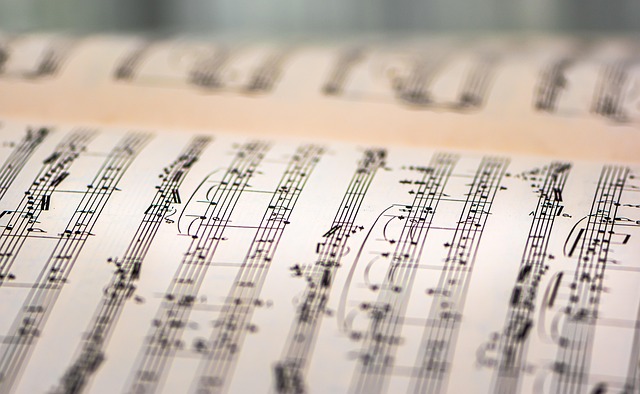
A.I. has not only been used to reconstruct paintings but also musical works. This is notably the case for Beethoven’s 10th Symphony. After his death, the composer left only a few notes related to this final piece, which was reconstructed thanks to Matthias Röder. The director of the Karajan Institute in Salzburg, Austria, brought together musicians, musicologists, Beethoven experts, and engineers to enable the A.I. to fully understand the composer’s style. Since 2019, A.I. has also been able to identify forgeries thanks to adversarial machine learning, which feeds it misleading data so that it can learn to detect fakes. The software analyzes brushstrokes by comparing high-definition photographs of other works by the same painter with the one being examined. |
|
|
Artificial intelligence can even assist collectors with their purchases by recommending works that match their tastes or that may be the most profitable investments. Large amounts of data are analyzed by algorithms such as ArtRank, Thread Genius, or systems developed by research programs like Docent Lab and Wonder, enabling buyers to make the best possible choice. A.I. can also bring voices and images back to life. In 2019, at the Dalí Museum in Florida, an installation brought the famous painter Salvador Dalí back to life. He appears on screens to talk to visitors about his life and work, give his opinion on the modern world, and even take selfies upon request. |
|
|
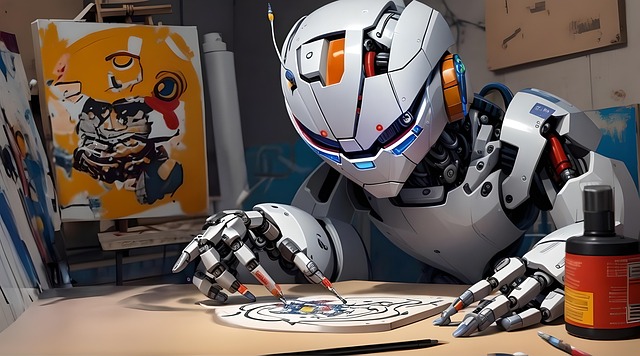
However, in the field of art, artificial intelligence also has negative aspects. Some users rely entirely on A.I. to create their works, leaving no room for the artist’s imagination and resulting in works with no real character. A.I. can also be used to create all kinds of fake news and even rewrite history. Following several scandals linked to these practices, UNESCO called on governments to address ethical issues related to A.I., stating: “This is the challenge of our time.” |